Choosing the right broadband provider for your home is one of the most important decisions you'll make for your household's connectivity. In the UK market, Virgin Media and Sky represent two fundamentally different approaches to delivering internet, TV, and entertainment services. Virgin Media operates its own cable network capable of gigabit speeds, whilst Sky primarily relies on the Openreach telephone network with newer full-fibre options through partnerships. This comprehensive comparison will help you understand the key differences and determine which provider best suits your household's needs in 2026.
Key Takeaways
- Virgin Media offers faster maximum speeds (up to 1.1 Gbps) on its cable network
- Sky provides more flexible TV packages with better entertainment content
- Virgin Media's availability is limited to areas with cable infrastructure
- Sky's customer service rankings have improved significantly in recent years
- Bundle costs are comparable, but value depends on which content and speeds matter most to you
Understanding the Infrastructure Difference
Before comparing packages and prices, it's crucial to understand the fundamental difference between how Virgin Media and Sky deliver their services, as this affects speeds, reliability, and availability.
Virgin Media: Cable Network
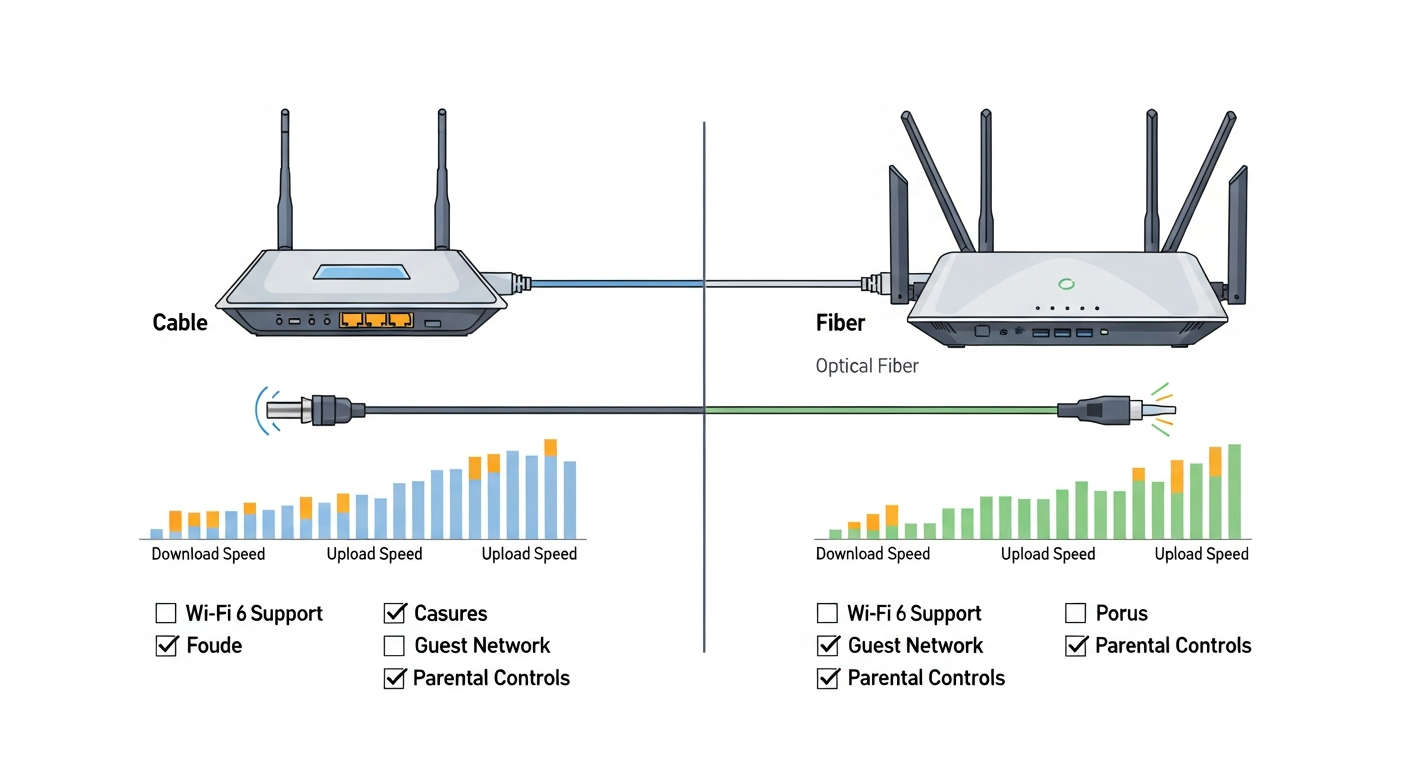
Virgin Media operates the UK's largest cable network, which it has been building and upgrading since the 1990s (originally as NTL and Telewest). This hybrid fibre-coaxial (HFC) network runs fibre optic cables to street cabinets, then coaxial cable into homes. The technology enables very fast download speeds—currently up to 1.1 Gbps on the Gig1 package.
The advantage of cable is speed capability. The DOCSIS 3.1 technology Virgin uses can theoretically support even faster speeds in future. The disadvantage is coverage: Virgin's network reaches approximately 16 million UK premises, which sounds impressive but means roughly half of UK homes cannot get Virgin Media services at all.
Sky: Openreach and Full Fibre
Sky traditionally delivered broadband via the Openreach network—the same infrastructure used by BT, TalkTalk, Plusnet, and many others. This uses existing telephone lines for the "last mile" connection, limiting speeds depending on the technology available in your area (ADSL, FTTC, or FTTP).
In recent years, Sky has expanded its full-fibre offerings through partnerships with Openreach, CityFibre, and other alternative network providers. Where full fibre is available, Sky can offer speeds up to 900 Mbps, approaching Virgin Media's capability. However, in areas still served by FTTC (fibre to the cabinet), maximum speeds typically cap at 35-65 Mbps.
Broadband Speed Comparison
| Package | Virgin Media | Sky |
|---|---|---|
| Entry Level | M125 (132 Mbps avg) | Superfast (59 Mbps avg) |
| Mid Range | M250 (264 Mbps avg) | Ultrafast (145 Mbps avg) |
| High Speed | M500 (516 Mbps avg) | Ultrafast Plus (500 Mbps) |
| Top Tier | Gig1 (1,130 Mbps avg) | Gigafast (900 Mbps) |
| Upload Speeds | 50-52 Mbps (all tiers) | Up to 110 Mbps (full fibre) |
Speed in Practice
Virgin Media's cable network historically delivered faster download speeds than Sky's Openreach-based services. However, with the expansion of full-fibre availability, Sky can now match or approach Virgin's speeds in covered areas.
One notable difference is upload speeds. Virgin Media's cable technology has an inherent asymmetry, with upload speeds capped at around 50 Mbps even on the fastest packages. Sky's full-fibre services offer more symmetrical speeds, with uploads reaching 110 Mbps on top-tier packages. For users who work from home, upload videos, or engage in cloud backup, this could be significant.
Independent testing by Ofcom and Which? shows that both providers generally deliver advertised speeds during off-peak hours. However, Virgin Media's cable network can experience congestion during peak evening hours in some areas, whilst Sky's performance is more dependent on your specific line quality and distance from the exchange.
Pricing Comparison (January 2026)
Broadband Only
| Speed Tier | Virgin Media | Sky |
|---|---|---|
| ~60 Mbps | Not available | £27/month (18mo) |
| ~130 Mbps | £28/month (18mo) | £32/month (18mo) |
| ~250 Mbps | £33/month (18mo) | £38/month (18mo) |
| ~500 Mbps | £40/month (18mo) | £45/month (18mo) |
| ~900+ Mbps | £52/month (18mo) | £52/month (18mo) |
Note: Prices shown are typical new customer rates as of January 2026. Both providers frequently run promotional offers that may reduce initial costs. Out-of-contract prices are substantially higher, emphasising the importance of reviewing your deal when your minimum term ends.
TV and Entertainment Packages
Both Virgin Media and Sky originated as TV providers, and their entertainment offerings remain core to their propositions. However, they take quite different approaches.
Virgin Media TV
Virgin Media's TV service is delivered through its cable network, offering a range of TV 360 boxes that provide access to live channels, on-demand content, and streaming apps. The interface integrates Netflix, Prime Video, Disney+, and other streaming services alongside traditional channels.
Virgin Media TV bundles include:
- Stream: Apple TV 4K box with selected streaming apps, ideal for cord-cutters
- Mix TV: 100+ channels including entertainment basics
- Bigger + Sports: 190+ channels plus Sky Sports and BT Sport (now TNT Sports)
- Bigger + Movies: 190+ channels plus Sky Cinema
- Ultimate Volt Bundle: Everything including all sports, movies, and fastest broadband
Virgin Media includes Netflix Basic as standard on most TV packages, and offers discounted upgrades to Netflix Standard or Premium. The TV 360 box is modern and capable, though some users find it less intuitive than Sky Q.
Sky TV
Sky remains the UK's premium TV provider, with the most comprehensive range of channels and content. Sky Q and the newer Sky Glass and Sky Stream devices provide access to live TV, recordings, and integrated streaming.
Sky TV bundles include:
- Sky Stream: Entry-level service with Sky originals and selected channels
- Sky Entertainment: 100+ channels plus Sky Atlantic, Comedy, and more
- Sky Cinema: Adds all movie channels and on-demand films
- Sky Sports: All Sky Sports channels, though priced as a premium add-on
- Sky Ultimate TV: Everything Sky offers in one package
Sky's original content—including acclaimed dramas on Sky Atlantic—is exclusive to Sky customers, making it the natural choice for those who value premium programming. Sky Glass, the company's streaming TV, eliminates the need for a satellite dish entirely.
TV Verdict
Sky offers superior TV content and the best user experience through Sky Q. However, Virgin Media provides better value if you primarily want broadband with some TV channels. For sports fans, the calculus depends on which sports matter most—Sky Sports dominates football, whilst BT Sport (TNT Sports) offers UEFA Champions League and Premier League coverage.
Customer Service Comparison
Customer service is often the deciding factor when broadband providers are otherwise closely matched. Both Virgin Media and Sky have had mixed reputations, though recent improvements are worth noting.
Virgin Media Customer Service
Historically, Virgin Media ranked poorly in customer satisfaction surveys, with complaints about long wait times, billing issues, and difficulties cancelling or modifying services. The company has invested in improving its customer service operations, including UK-based call centres and a more responsive social media team.
In Ofcom's most recent complaints data, Virgin Media received 24 complaints per 100,000 customers for broadband—above the industry average of 18 but improved from previous years. Virgin's community forums and online troubleshooting tools are generally well-regarded.
Sky Customer Service
Sky has traditionally performed better in customer service rankings. The company operates extensive UK-based support teams and has won multiple awards for customer experience. In Ofcom's data, Sky received just 8 complaints per 100,000 customers—significantly below the industry average.
Sky's online account management, app, and self-service options are comprehensive. The company's loyalty team is also known for offering competitive retention deals to customers approaching the end of their contracts.
Customer Service Verdict
Sky clearly outperforms Virgin Media on customer service metrics. If reliable, stress-free support is important to you, this weighs in Sky's favour.
Contracts and Flexibility
Contract Lengths
Both providers primarily offer 18-month contracts on their main packages, though shorter 12-month and rolling monthly options exist at higher prices. Early termination fees apply if you leave before your minimum term ends.
Neither provider has distinguished itself with contract flexibility. Price increases are common for both during contracts (though these must be communicated in advance), and negotiating mid-contract changes can be challenging.
Installation
Virgin Media installation requires a visit from an engineer if your property isn't already connected to the cable network. This typically takes 2-4 weeks to arrange and 1-2 hours to complete. For existing cable homes, self-installation is sometimes possible.
Sky installation depends on your chosen services. For broadband-only via Openreach, setup can be quick with a self-install kit. For Sky TV with a satellite dish, an engineer visit is required. Sky Glass and Sky Stream require no dish installation.
Equipment Comparison
Routers
Virgin Media supplies its Hub 5 router as standard, which supports WiFi 6 and provides good coverage for most homes. The Hub 5 includes a wired mesh extender option for larger properties.
Sky provides its Sky WiFi Hub, also supporting WiFi 6, with the option to add Sky WiFi Boosters for extended coverage. The Sky system's mesh network integration is generally rated as more seamless than Virgin's.
TV Boxes
Virgin Media's TV 360 box is a capable device with 4K and HDR support, voice control, and integrated streaming. Storage is limited to 500GB, which may constrain heavy DVR users.
Sky's Q box remains the gold standard for UK TV equipment, with 1TB or 2TB storage options, intuitive interface, and excellent performance. Sky Glass combines the box with a QLED TV in one device. Sky Stream offers a compact streaming-only option for those who don't want satellite hardware.
Additional Features and Perks
Virgin Media
- Volt: Combine Virgin Media broadband with O2 mobile for speed boosts and double data
- Intelligent WiFi: Automatic network optimisation and parental controls
- WiFi Guarantee: Money back if WiFi doesn't perform
- Virgin Media Connect App: Network management and troubleshooting
Sky
- Sky VIP: Rewards programme for long-term customers
- Sky Go: Watch TV on mobile devices anywhere
- Sky Store: Buy and rent movies
- Ultra HD and Dolby Atmos: Premium picture and sound quality
- Multi-room: Watch Sky TV throughout your home
Which Should You Choose?
Choose Virgin Media If:
- You're in an area with Virgin Media coverage (check at virginmedia.com)
- Maximum download speed is your priority
- You're an O2 mobile customer or considering switching (Volt benefits)
- You primarily want fast broadband with optional basic TV
- You're willing to tolerate potentially weaker customer service for faster speeds
Choose Sky If:
- Premium TV content is important to you (Sky originals, comprehensive sports)
- Customer service quality matters
- Virgin Media isn't available at your address
- You prefer a more established, intuitive TV experience
- Upload speed is important for your work or hobbies
- You want the option of Sky Glass or dish-free streaming
Pro Tip: Don't forget to consider alternatives. BT, TalkTalk, Plusnet, and newer full-fibre providers like Hyperoptic, Community Fibre, and Gigaclear may offer competitive packages in your area—sometimes at lower prices than either Virgin Media or Sky.
Making Your Decision
Both Virgin Media and Sky are capable providers that will meet the needs of most UK households. The "best" choice depends entirely on your specific priorities, location, and usage patterns.
Start by checking availability at your address on both providers' websites. This may narrow your options immediately. Then consider which features matter most: raw speed, TV content, customer experience, or overall value. For many households, the decision will come down to whether premium TV content justifies Sky's positioning, or whether Virgin Media's cable speeds and Volt integration offer better value.
Whichever you choose, remember to review your contract when the minimum term ends. Both providers significantly increase prices out of contract, and the best deals are always available to those willing to switch or negotiate.